The Method
Real wine,
carefully de-alcoholized.
Most non-alcoholic wine starts as juice and tries to taste like wine. Ours is the opposite: it's wine first, and we remove the alcohol with care.
- 01
Make real wine first.
We harvest from Russian River Valley vineyards Diego has worked for over a decade. The fruit ferments to dryness, ages in neutral oak, and finishes as honest, structured wine — long before the alcohol comes out.
Russian River Valley · Pinot Noir, Chardonnay, Rosé
- 02
Vacuum distillation, gently.
We remove the alcohol with vacuum distillation. Lower pressure means lower temperature — which means the aromatics that make a wine smell like wine survive the process. Spinning-cone systems are faster, but they strip more flavor. We chose slower.
Below 35°C · single-pass · low oxygen
- 03
Re-balance with the same fruit.
After the alcohol is out, the wine needs a touch of body and sweetness back. We use grape concentrate from the same vineyard source — never sugar, never grape juice from elsewhere. Texture, mid-palate, and varietal character all come back.
Same vineyard. Same season. Same wine.
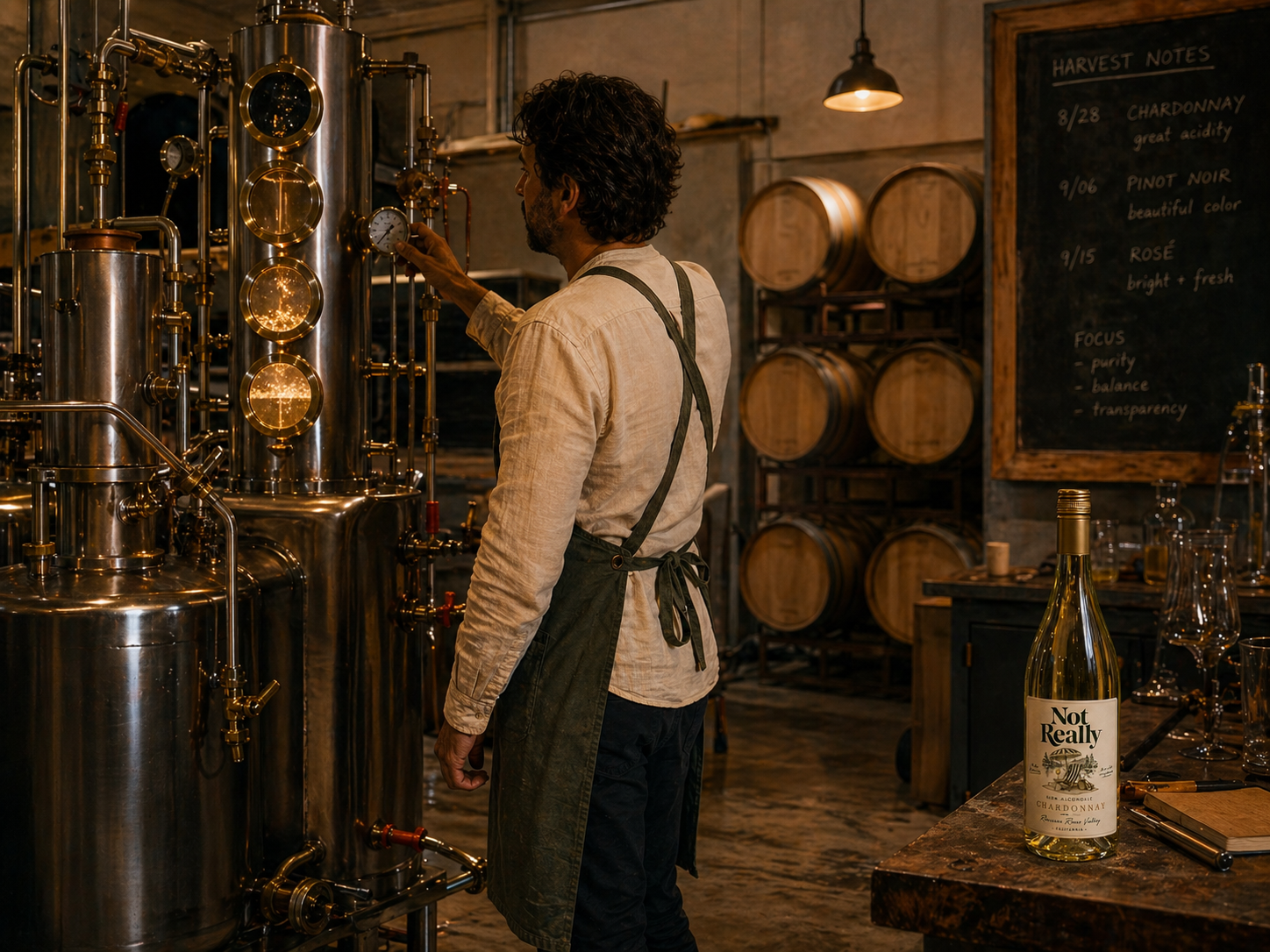
"I tasted a hundred NA wines before we started. Most were grape juice in costume. We made a rule: if it doesn't pour like wine, doesn't smell like wine, doesn't finish like wine — it doesn't go in the bottle."
Why it matters
Two ways to take alcohol out of wine.
Spinning cone
The mass-market default.
- Fast, high-volume
- Higher heat exposure
- Strips delicate aromatics
- Often produces a one-note finish
Vacuum distillation Ours
Slower, gentler, more wine-like.
- Low temperature, low pressure
- Aromatics largely intact
- Holds onto savory, earthy notes
- Slower & more expensive — worth it